
Why Does The Engine Consume A Lot Of Oil?

Why does the engine consume oil?
Latest update date: February 21, 05

Engine oil consumption is the phenomenon of the engine consuming a certain amount of oil during operation. This consumption can vary depending on the engine type, age, operating conditions and quality of oil used. This is one of the most common problems faced by car owners, with about 35% of cars over 5 years old experiencing this condition. 

According to statistics from the Society of Automotive Engineers (SAE), a normally operating engine should only consume about 0.1-0.3 liters of engine oil for every 1,000 km. However, many vehicles are consuming 2-3 times this amount, causing high costs and seriously affecting operating performance.

Engine oil plays an important role as the “blood” of the engine, performing 3 main functions: lubricating moving parts, cooling parts and washing away dirt. When the engine consumes too much oil, it not only causes financial costs (an average of 2-3 million VND/year for oil replenishment), but also increases the risk of serious damage with repair costs that can reach tens of millions of VND.

Research from the Vietnam Automobile Engineering Institute shows that up to 80% of oil loss cases can be prevented if car owners understand the causes and have proper maintenance measures. 

This paragraph, Thanh Phong Auto will analyze in detail the common causes of engine oil loss, from piston ring wear to gaskets and seals problems, and provide effective solutions to help prolong engine life and save operating costs.

Why does the engine consume oil?

Engine Oil Consumption: Why Is It Important?

Engine oil plays a key role in lubricating, cooling and protecting the engine. It creates a lubricating film between moving parts, reducing friction, limiting wear and tear and prolonging engine life. However, when the engine consumes too much oil, it will lead to a series of negative consequences such as:

  • Decreased engine performance and power due to increased friction.
  • Increased risk of breakdown, wear and serious damage to the engine.
  • Increased costs of maintenance, repair and replacement of spare parts.
  • Causes environmental pollution due to waste oil and smoke emitted from the exhaust pipe.

Early detection of abnormal oil wear can reduce potential repair costs by 65% ​​and extend engine life by 30-50%. Timely treatment ensures stable engine operation with optimal performance during the first 250.000-300.000km.

According to a 2023 study by the Society of Automotive Engineers (SAE), when an engine consumes more than 0,5 liters of oil per 1.000km, it leads to the following four serious consequences:

  • Reduced engine performance: Power can be reduced by 15-20% due to increased friction between machine parts.
  • Increased risk of failure: The chance of a serious failure increases by 72% compared to a normally operating engine.
  • Increased operating costs: Maintenance and repair costs are 40-60% higher than vehicles without oil loss.
  • Environmental Pollution: Increases carbon emissions by 35% and releases 2-3 liters of waste oil into the environment every month.

What Are The Signs To Recognize And Diagnose Abnormal Oil Consumption?

There are 5 typical signs that the engine is consuming oil beyond the allowable level, including:

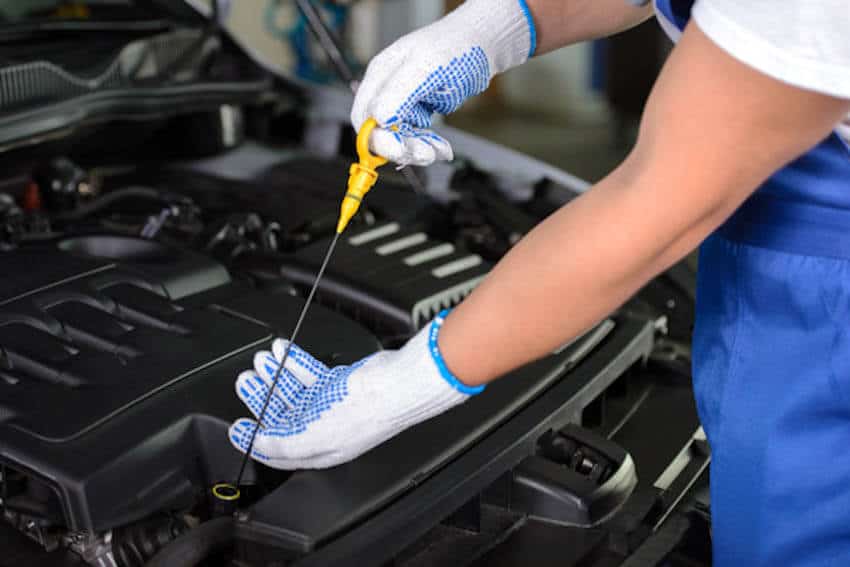
  • Rapid oil level drop: Check the dipstick and see if the oil level drops more than 20% after 1.000km of operation or drops below the “Min” line within 2.000-3.000km. The safety standard is that the oil level is always between the “Min” and “Max” lines.
  • Blue or white smoke from the exhaust pipe: Blue smoke appears when the engine is hot (temperature above 90°C) indicating that oil is being burned in the combustion chamber at a rate of 0,3-0,5 liters/1.000km.
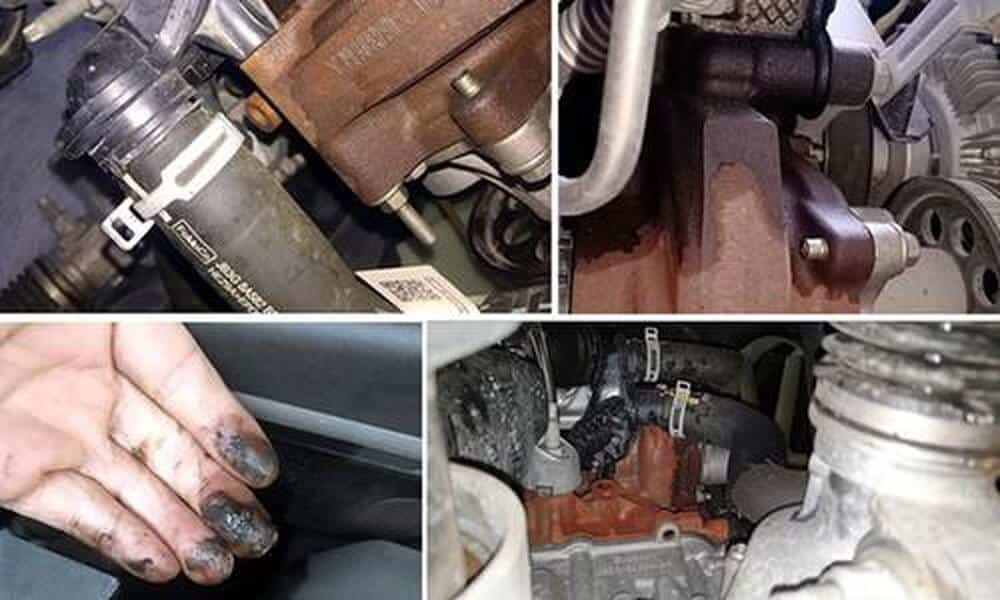
  • Oil stains under the car or on the engine body: Appears under the car (area 5-10cm²) or on the engine body, usually due to leakage from rubber gaskets, crankshaft seals or oil pipes that have deteriorated after 60.000-80.000km.
  • Oil pressure warning light is on: Oil pressure warning below 0,3-0,5 bar (safe level is 2-5 bar), indicating that the oil level has seriously decreased below 50% of the standard level.
  • Strange noise from the engine: A metallic knocking or rattling sound occurs at a frequency of 3-5 times/second when the engine speed is above 2.000 rpm, indicating that the parts are being directly rubbed due to lack of lubricating oil.

When one or a combination of the above symptoms appear, the vehicle should be taken to a professional garage for inspection and accurate diagnosis of the cause of oil loss. Technicians will use modern equipment such as cylinder pressure gauges, engine endoscopes and exhaust gas analyzers to determine the location and extent of damage as well as provide appropriate repair and remedy options.

What Causes Engine Oil Consumption?

The six main causes of engine oil consumption include internal mechanical problems such as piston ring wear, valve clearance, seal failure, and oil leakage, as well as external factors such as use of poor quality oil and engine overheating.

- Why Does The Engine Consume A Lot Of Oil?
Why does the engine consume oil?

1. Piston Rings Wear

Piston rings are important components located between the piston and the cylinder wall, which help to seal the combustion chamber, preventing oil from entering and compressed air from escaping. When the piston rings wear out due to long-term operation, the gap between the piston and cylinder will increase, allowing oil to be sucked into the combustion chamber and burned along with the fuel.

According to research by the International Engine Engineering Association (2023), normal piston rings have a clearance of 0,02-0,05mm, but when worn after 80.000-120.000km, the clearance can increase to 0,1-0,3mm.

2. Valve opening

The intake and exhaust valves open and close periodically to regulate the flow of air-fuel mixture into and exhaust gas out of the cylinder. If these valves become loose due to mechanical wear or improper assembly, oil from the camshaft and valves can leak, flow down into the combustion chamber and burn during the explosion.

According to research by the Technical University of Stuttgart (2022), standard valve clearances range from 0,1-0,3mm for intake valves and 0,3-0,5mm for exhaust valves.

3. Damaged Valve Stem Seals

The gasket is a sealing ring-shaped part, installed around the valve shaft to prevent oil from leaking from the camshaft into the combustion chamber. Due to constant friction and high temperature, the gasket can harden, crack or deform over time, no longer able to seal the valve shaft. At that time, the oil will flow into the combustion chamber through the gap between the valve shaft and the gasket and be burned.

4. Oil leak

The engine has many joints and fittings that need to be absolutely tight to prevent oil from leaking out. Oil leaks are likely to occur in the valve cover, oil filler cap, crankcase gasket and crankshaft seal. The cause of the leak may be due to the gasket or seal being old, brittle, deformed or improperly installed.

5. Using poor quality engine oil

Counterfeit, imitation, and poor quality engine oil does not meet technical standards for viscosity, heat resistance, oxidation resistance, and cleaning ability. Using this type of oil causes the engine to operate inefficiently, degrade quickly, and at the same time creates dirt and soot that sticks and clogs the oil lines. As a result, the engine oil is consumed faster than normal.

6. Engine overheating

When the engine is continuously operating in conditions of excessively high temperatures, the quality of the oil will deteriorate, gradually losing its viscosity and lubricating ability. At the same time, high temperatures also cause the oil to evaporate more easily, burn faster, leading to increased oil loss. The cause of engine overheating may be due to a malfunction in the cooling system, the use of unsuitable oil, or the engine being overloaded.

Oil Consumption in Turbocharged Engines: Features and Solutions

Turbocharged engines tend to consume more oil than naturally aspirated engines due to the higher operating temperatures and pressures. Turbochargers operate at very high speeds (up to 300.000 rpm) and very high temperatures (up to 900°C), requiring good heat resistance and lubrication from the oil.

According to research by the European Institute of Automotive Engineering (2023), these working conditions require the oil to have a viscosity index above 150 and excellent heat resistance in the temperature range from -30°C to +150°C to maintain optimal lubrication performance.

- Why Does The Engine Consume A Lot Of Oil?
Oil consumption in turbocharged engines

Some causes of oil consumption in turbo engines include:

  • Turbo oil leak: The turbo seal can be damaged by high temperatures and high pressures, causing oil to leak into the intake or exhaust manifold.
  • Oil Burned in Turbo: Oil can get into the turbocharger and burn due to high temperature, creating blue smoke and reducing turbo performance.
  • Using the wrong oil: Oil that does not meet the heat and lubrication requirements of a turbo engine can decompose and cause deposits, clog oil passages and damage the turbo.

To minimize oil consumption in turbo engines, the following measures should be taken:

  • Use high-quality engine oil: Choose an oil grade suitable for turbo engines, usually synthetic oil with a high viscosity index (for example: 5W-40 or 5W-50).
  • Regular oil changes: Change the oil and oil filter more often than with naturally aspirated engines, about 5.000 – 7.000 km or as recommended by the manufacturer.
  • Check turbo regularly: Check turbo periodically to detect early signs of oil leaks or damage.
  • Cool the turbo after operation: After operating the vehicle at high speed or under heavy load, the engine should be left idling for a few minutes to cool the turbo before turning off the engine.

What Measures Can Be Taken To Overcome And Prevent Engine Oil Consumption?

To fix and prevent engine oil consumption, car owners need to apply the following measures:

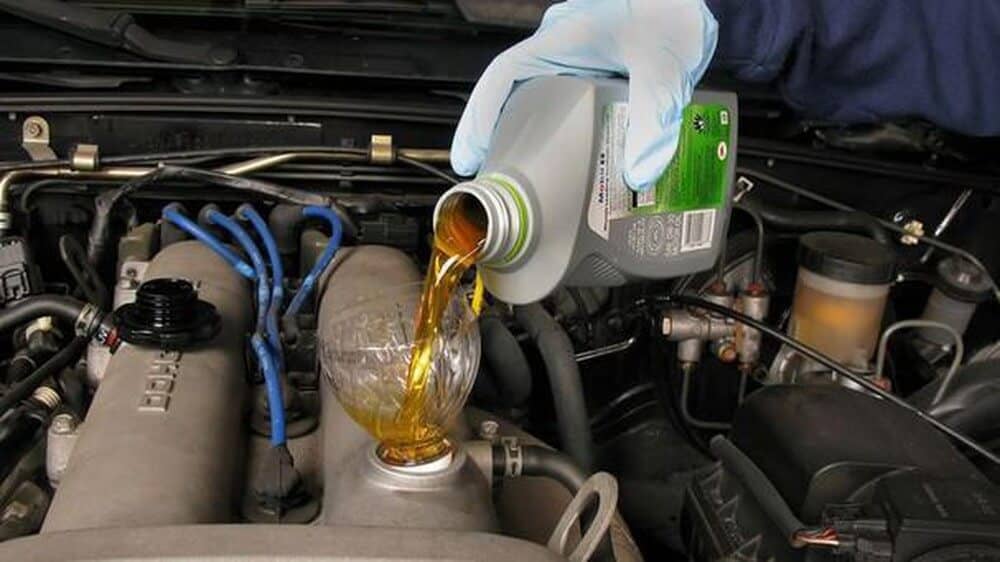
  • Change the oil and oil filter regularly according to the manufacturer's recommendations. Depending on the engine type and operating conditions, the oil change interval ranges from 5000 to 7500 km for gasoline engines and 3000 to 5000 km for diesel engines.
  • Use high quality engine oil that meets API and SAE standards and is suitable for the engine type and environmental conditions. Prioritize choosing fully synthetic or semi-synthetic engine oil that has good heat resistance, low volatility and effective anti-wear properties.
  • Periodically check and maintain parts that are prone to oil leaks such as gaskets, seals, belts, oil pipes, etc. When detecting any signs of damage, hardening or deformation, they must be replaced promptly.
  • Drive properly, avoid running the engine at too high a speed (red zone) for a long time. Limit sudden acceleration, braking, and shifting gears, which can cause sudden pressure on the engine. Start the engine and let it idle for 1-2 minutes before moving.
  • Check and handle causes of engine overheating such as leaking radiator, broken fan, weak water pump, broken radiator signal, etc. When engine temperature exceeds the allowable threshold, stop the vehicle immediately for inspection and repair.
Oil change cycle Engine type Operating conditions
5.000 - 7.500 km Gasoline engine Normal
3.000 - 5.000 km Diesel engine Normal
2.500 - 3.000 km Gasoline/diesel engine Harsh
 
- Why Does The Engine Consume A Lot Of Oil?
How to prevent and fix engine oil consumption effectively

FAQ – Frequently Asked Questions

1. Do manual transmission cars consume more oil than automatic transmission cars? 

Not. Gear does not directly affect engine oil consumption. However, the way you drive a manual transmission (such as frequent acceleration and sudden braking) can increase pressure on the engine and consume more oil.

If you are looking to buy a car, see more articles Should I buy a manual or automatic car?

2. Are there any additives that can help reduce oil consumption effectively and safely? 

Some additives can help improve the performance of the oil and reduce consumption. However, it is necessary to choose additives from reputable brands and follow the instructions for use. It is best to consult an expert before using additives. See the product now: WURTH oil additive 300ml.

3. How to distinguish between real and fake engine oil on the market? 

To avoid buying fake engine oil, choose authorized dealers, check the anti-counterfeit stamp and QR code on the product packaging. Genuine engine oil usually has high-quality packaging, clear labels and a characteristic smell.

4. Is there a way to check the piston rings at home without going to the garage? 

The test car cement requires disassembling the engine and measuring the clearance with a specialized tool. Therefore, it is best to take the car to a garage to have the piston rings inspected and accurately assessed.

5. Should I use synthetic oil for old cars? 

Synthetic oil has many advantages such as good heat resistance, stable viscosity and effective anti-wear. However, when used for old cars, some issues need to be noted such as compatibility, engine condition and maintenance costs. It is advisable to consult an expert before deciding to switch to synthetic oil. See more articles: CK & CJ Engine Oil: Which is Best for Diesel Engines??

6. If the engine is losing oil, do I need to change the oil filter? 

Yes, the work change oil filter Regular oil filter replacement is important, especially if your engine is having trouble with oil consumption. A dirty oil filter can clog it, reducing oil flow and causing your engine to run less efficiently. Replacing the oil filter helps ensure clean oil and better circulation.

7. Is using recycled engine oil good for the engine? 

Recycled oil has been used and processed to remove impurities and restore some properties. However, the quality of recycled oil is often not guaranteed to be as good as new oil. Using recycled oil can cause long-term damage to the engine. It is best to use new, genuine oil to ensure engine quality and performance.

8. Which garage repairs/maintains cars with good reputation and cheap price in HCM? 

Thanh Phong Auto proud to be one of the leading auto repair and maintenance garages in Ho Chi Minh City. With the motto "Honesty – Dedication – Responsibility – Sharing“, Thanh Phong Auto is constantly developing and improving to meet the increasing needs of customers.

Highlights of car care services at Thanh Phong Auto:

  • A team of skilled engineers and technicians are well-trained from prestigious universities such as University of Science and Technology, University of Technical Education, and University of Transport.
  • Modern equipment and machinery meet international standards, ensuring the best service quality.
  • Use high-end car care products from famous brands such as 3M, Wurth.
  • Professional, closed car care process from cleaning, maintenance to restoration and upgrading of interior and exterior.
  • Transparent and clear quotes from the beginning. Separate warranty for each service.
  • Serving a variety of car lines from popular to high-end such as Mercedes, BMW, Audi, Lexus, Toyota...

With the above outstanding advantages, Thanh Phong Auto is committed to providing customers with prestigious, high-quality car care services at the most reasonable cost. Come to Thanh Phong Auto to experience the difference and feel secure in entrusting your "beloved car".

In short, engine oil consumption is a common problem but should not be ignored. Recognizing abnormal signs, determining the cause and applying timely remedies will help ensure stable engine operation, prolong its life and save on operating costs.

4.8/5 - (283 votes)

LEAVE COMMENT

Your email will not be displayed publicly. Required fields are marked *


Service Price List At Thanh Phong Auto

* The cars that we have mechanics: Mercedes, BMW, Audi, Lexus, Toyota, Honda, Mazda, Mitsubishi, Kia, Daewoo, Hyundai,Ford, Nissan, Volkswagen, Porsche, Chevrolet, Rand Rover, Innova, Fortuner, Vios, Fiat, Bugatti, Ferrari, Bentley, Hummer , Chrysler, Dodge, Renault, Cadillac, Volvo, Subaru, Daihatsu, Ssangyong, Roll-Royce, Peugeot, Smart Fortwo, Tobe M'car, Luxgen, Zotye, Haima, Geely, Baic, Hongqi, Cmc, Mini Cooper, Buick, Opel, Acura, Aston Martin, Vinfast, TQ Wuling, BYD.


>> Car maintenance schedule and maintenance levels (Applicable to cars without periodic maintenance reminder lights) <<


Quality and standards at Thanh Phong Auto

Since 2019, Thanh Phong Auto was selected to link formal training with the Thu Duc College of Technology, Vietnam-USA College, Binh Duong University, University of Science and Technology, Van Lang University. This helps Guarantee for quality and standards at Thanh Phong AutoYou can rest assured about the quality and skills of the technicians here.


Mobile Car Repair Service At Home 24/7 (In Ho Chi Minh City Area)

Mobile car repair service at home in HCMC

GOLDEN COMMITMENT

“No repair – No charge – 100% refund if customer is not satisfied!”

Book