
Car Electronic Handbrake: Features, Advantages, Disadvantages & Usage Notes

car electronic handbrake
Latest update date: February 16, 10

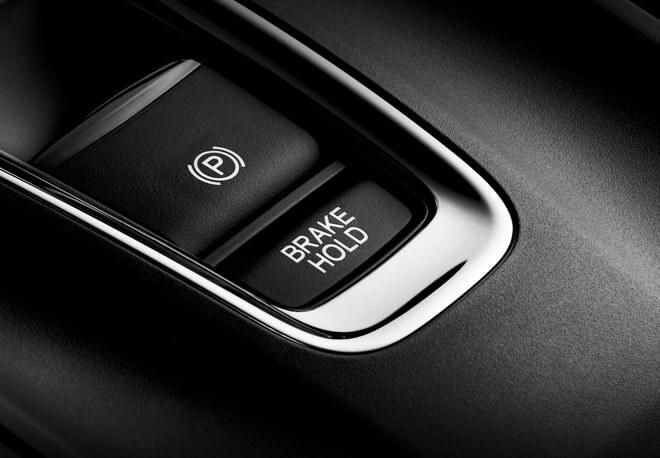
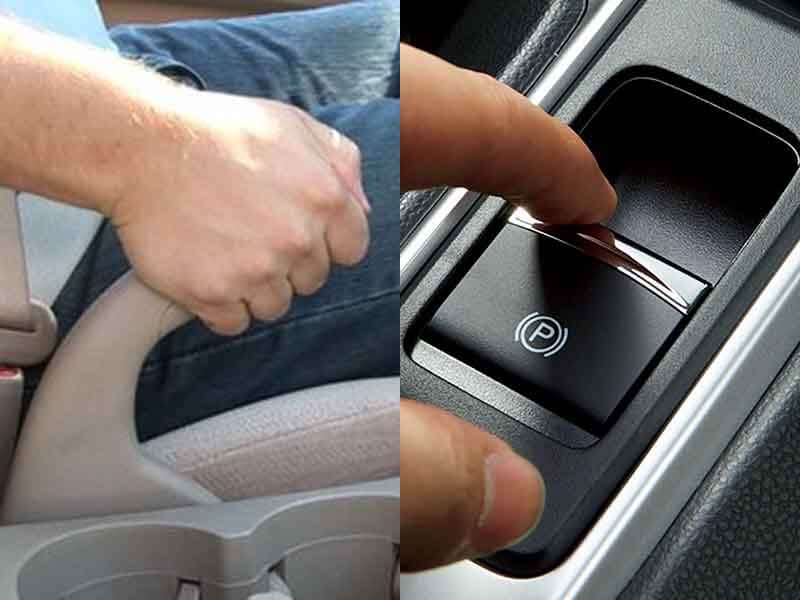
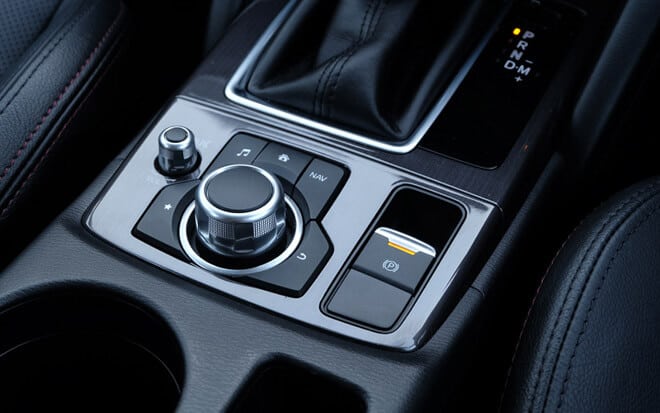
Electronic parking brake (EPB) is a modern parking brake system that replaces the mechanical handbrake, operated by a button instead of a pull rod or pedal. Thanks to the coordination between the electric motor and the ECU controller, EPB squeezes or releases the brake pads to keep the vehicle stationary safely and conveniently.

According to JD Power research (2023), models equipped with an electronic parking brake (EPB) recorded a 15% reduction in collision rates when stopping, demonstrating a significant improvement in safety.

The electronic handbrake integrates safety features such as Auto Hold, Hill Start Assist and ABS and ESC linkage to increase vehicle control. Compared to traditional handbrakes, the EPB automatically locks and releases, saving cabin space and improving driving experience. However, the maintenance system is more complicated, requiring specialized techniques and equipment.

To maintain efficiency and durability, users need to operate properly, monitor the power source, detect early signs of abnormalities and perform regular maintenance at a reputable garage. These are important factors that help EPB operate stably, ensuring safety on every journey.

And Thanh Phong Auto Learn in detail about the features, advantages and disadvantages as well as notes when using the electronic handbrake.

car electronic handbrake
Car electronic handbrake: A-Z overview

What is Electronic Handbrake? How Does It Work?

The Electronic Parking Brake (EPB) is a parking brake system that uses an electronic button instead of a mechanical pull rod to keep the vehicle stationary. The operating mechanism is based on an electric motor combined with an ECU controller, which automatically tightens or releases the brake pads, ensuring safety and convenience in all stopping and parking situations.

Compared with traditional handbrake, EPB has the advantage of automatic locking/releasing and saving cabin space, but requires more complicated maintenance.

1. Basic structure of electronic brake

The Electronic Parking Brake (EPB) is designed based on the principle of automating the traditional parking brake operation, in which mechanical parts are replaced by electronic and electromechanical components. This system usually consists of three main parts:

  • Electric motor: Creates a force to tighten the brake pads against the disc or drum, keeping the wheel fixed.
  • ECU (Electronic Control Unit): Receive and process signals from the driver, and coordinate with other safety systems on the vehicle.
  • Control switch: Electronic push button completely replaces the mechanical handbrake lever.

Thanh Phong Auto recommends periodic inspection of the motor and ECU every 20.000 km. This helps to detect potential damage early. From there, you maintain the safety and efficiency of the EPB.

- Car Electronic Handbrake: Features, Advantages, Disadvantages & Usage Notes
Structure of car electronic handbrake

2. Working principle

The Electronic Parking Brake (EPB) works based on the coordination between the mechanical mechanism and the electronic signal. When the driver operates the switch, the signal is transmitted to the ECU; the ECU then controls the electric motor to tighten or release the brake pads, thereby holding or releasing the wheel.

  • Activate the brake: The driver presses or pulls the EPB button → ECU issues a command → the motor tightens the brake pads, keeping the vehicle fixed.
  • Release the brake: The driver steps on the foot brake and presses the EPB button → the motor releases the force → the wheel moves freely.
  • Safety mechanism: The system can automatically open when the driver steps on the accelerator (on automatic transmission vehicles), and display an error warning on the dashboard if a problem is detected.
- Car Electronic Handbrake: Features, Advantages, Disadvantages & Usage Notes
How the electronic handbrake of a car works

Compared with traditional mechanical handbrake:

Criteria EPB Mechanical handbrake
Operation Push button, automatic Manual pull
Cabin space Economical and modern Occupy area
Safe Self-locking, Auto Hold Easy to forget to pull/release
Maintenance Complex, electricity dependent Simple, less dependent

Thanh Phong Auto found that EPB significantly reduces the situation of forgetting to pull/release the brake, especially when stopping on a slope or in heavy traffic.

Safety and Driving Assistance Features of the Electronic Parking Brake

The Electronic Parking Brake (EPB) not only keeps the vehicle stationary but also integrates many safety features such as Auto Hold, Hill Start Assist and links with the ABS and ESC systems to increase control. Thanks to automation, EPB helps reduce driver errors, providing a safer and more convenient driving experience.

1. Auto Hold feature

Auto Hold allows the system to automatically maintain braking force when the vehicle stops without the driver needing to hold the brake pedal. When the accelerator is pressed, the brake will automatically release, providing a smoother and safer driving experience. Specifically:

  • Helps drivers reduce leg fatigue when moving in crowded urban areas.
  • Limit the phenomenon of rolling downhill when the vehicle is carrying heavy loads.
  • Combined with safety warnings, avoid minor collisions while stopping.

2. Hill-Start Assist

In steep terrain conditions, Hill-Start Assist helps keep the vehicle stable for 2-3 seconds after releasing the brake pedal, preventing the vehicle from rolling backwards. This function is especially useful for manual transmission vehicles or heavy trucks. Supports smooth transition from braking to acceleration, without jolting.

According to the Vietnam Register (2023), 62% of vehicles equipped with EPB currently have the Hill-Start Assist feature integrated, showing its popularity and necessity.

- Car Electronic Handbrake: Features, Advantages, Disadvantages & Usage Notes
Electronic handbrake with hill start assist

3. Link with other security systems

EPB does not operate independently but is designed to be closely linked to electronic safety systems such as ABS and ESC. This helps to improve control in emergency situations. Notably:

  • Anti-lock braking system (ABS).
  • Keeps the vehicle stable during sharp turns or sudden braking (ESC).
  • Increase accuracy and reliability when handling unexpected situations.
- Car Electronic Handbrake: Features, Advantages, Disadvantages & Usage Notes
Electronic handbrake linked with ABS safety systems

4. Minimize the problem of forgetting to pull or release the brake

A notable advantage of EPB is the ability to automate handbrake operation, reducing the risk of driver carelessness. Typical examples include:

  • Visual warning on the dashboard when the driver forgets to pull or release the brake.
  • Automatically lock or unlock the brake depending on the operating situation.

According to a survey at Thanh Phong Auto (2023), EPB helps reduce up to 80% of brake failure incidents in urban vehicles.

What Are The Advantages And Disadvantages Of Electronic Handbrake?

The Electronic Parking Brake (EPB) offers many benefits such as simple operation, increased safety, space saving and improved interior aesthetics. However, this technology also has limitations such as high repair costs, dependence on electricity and a shorter lifespan than mechanical parking brakes. 

In Vietnam, EPB is increasingly popular on C/D class sedans and mid-range SUVs, meeting users' needs for comfort and safety.

- Car Electronic Handbrake: Features, Advantages, Disadvantages & Usage Notes
What are the advantages and disadvantages of using electronic handbrake?

1. Advantages

Compared to the traditional mechanical handbrake, EPB brings a series of significant benefits in terms of aesthetics, convenience and operational safety. This technology not only helps the interior space become more modern but also enhances the driving experience in many real-life situations. The following 4 advantages can be mentioned:

  • Save cabin space: Eliminates mechanical pull lever, making the cockpit more spacious and modern.
  • Aesthetics increase: Neat interior, creating a luxurious feeling.
  • Higher safety: Integrated with many support features such as Auto Hold, Hill-Start Assist.
  • Reduce the risk of brake lockup: By using electronic mechanism instead of mechanical cable.
  • Simple operation: Suitable for new drivers and automatic cars.

2. Defect

Despite its many advantages, EPB still has some limitations that users need to be aware of. These factors are mainly related to repair costs, longevity and dependence on electricity, which is less common with mechanical handbrakes. Notably:

  • High repair costs:EPB motor replacement ranges from 400 – 900 USD.
  • Dependent on power source: Cannot operate when battery is low or dead.
  • Lower life than mechanical handbrake: Average 5 – 7 years, while mechanical brakes reach 8 – 10 years.
  • Periodic maintenance required: To avoid brake jamming or electric motor damage.

3. EPB trends in Vietnam

In the Vietnamese market, the trend of equipping EPB is becoming more and more evident due to the need for safer and more convenient vehicle use of users. This popularity comes from the fact that car manufacturers have made EPB a standard equipment in many segments, especially in C/D class sedans and mid-range SUVs. 

According to Thanh Phong Auto statistics:

  • Most of the current C/D class sedans and mid-range SUVs are integrated with EPB.
  • Users appreciate the convenience, especially in crowded urban areas and on steep roads.
  • The demand for EPB maintenance and repair at reputable garages also increases along with the number of vehicles using this technology.

What Should Be Note When Using And Maintaining Electronic Handbrake?

For the electronic handbrake (EPB) to operate safely and durably, users need to use it properly, check the power source regularly and pay attention to unusual signs. At the same time, periodic maintenance at a reputable garage helps prolong the life of the system and limit the risk of damage.

1. How to use correctly

EPB has a different operating principle than mechanical brakes, so correct operation from the beginning will help the driver avoid system damage and ensure safety when operating. 3 important instructions include:

  • Always apply the foot brake before releasing the EPB.
  • Do not use EPB as a replacement for the foot brake while the vehicle is moving, except in an emergency.
  • When stopping for a long time on a slope, you should shift to P to increase safety.

2. Note when the battery is weak or damaged

Due to its complete dependence on electricity, EPB may get stuck or not release the brakes when the battery is low. Therefore, users need to actively monitor the power status to prevent inconvenient or dangerous incidents. Specifically:

  • Be aware that EPB will not operate when the battery is weak, resulting in the vehicle not releasing the brakes.
  • Check voltage before moving.
  • Replace the battery regularly to avoid unexpected problems.

3. Signs of system problems

Like other electronic components in the car, EPB can develop errors after a period of use. Early detection of abnormalities will help to handle them promptly, limit serious damage and high repair costs. 3 common symptoms include:

  • The EPB warning light is on continuously on the dashboard.
  • There is an unusual noise or vibration when the brake is applied.
  • Brake response is slow or imprecise.
- Car Electronic Handbrake: Features, Advantages, Disadvantages & Usage Notes
The warning light is on on the dashboard

4. Maintenance recommendations

To maintain the long-term stability of the EPB system, users should follow the maintenance recommendations from the manufacturer and reputable garage. Maintenance does not stop at cleaning the brake pads but also requires checking the electric motor, ECU and control software. Specifically:

  • Check the EPB system every 20.000 km or 1 year of use.
  • Clean brake pads, check electric motor and update ECU software.
  • Refer to repair services at reputable centers such as Thanh Phong Auto to ensure quality and avoid serious damage.

Frequently Asked Questions About Electronic Parking Brakes in Cars

1. How many activations can the electronic parking brake withstand during its lifetime?

A standard EPB can withstand 50.000 – 70.000 tightening/releasing cycles, equivalent to about 8–10 years of operation in urban conditions.

2. How is the brake pad life different when using EPB compared to mechanical handbrake?

Statistics show that brake pads used with EPB are usually more durable, averaging 60.000 - 80.000 km compared to 50.000 - 70.000 km for mechanical brakes, thanks to the even and stable tightening force.

3. How often does the EPB ECU software need to be updated?

Car manufacturers recommend updating once a year or every 20.000 km to optimize the tightening algorithm and compatibility with other safety systems.

4. Should you choose a mechanical handbrake or an electronic handbrake when buying a car?

The mechanical handbrake has the advantage of being cheap and easy to repair (VND 500.000-1.500.000) but is manually operated. Meanwhile, the electronic handbrake is more modern, has an Auto Hold feature and a neat design. 

To understand better, you can refer to the article Distinguishing between two types of car handbrakes popular today to choose the one that suits your needs.

5. Common problems with the brake system and how to handle them effectively?

9 common failures of car brake system with the following effective treatments:

  • Low brake oil level → Check and add oil, handle leaks.
  • Low or light brake pedal → Bleed air, adjust brake shoes or replace brake pads.
  • Large brake pedal travel → Check brake pad wear, add oil if needed.
  • Brake pedal vibration → Check or replace brake discs, check wheel balance.
  • Brake noise → Clean, replace new brake pads, lubricate.
  • The car swerved to one side when braking. → Check the wheel cylinder, adjust the brake shoes evenly on both sides.
  • The brake pedal is stiff. → Check the power steering and vacuum line.
  • Brake lock → Check cylinder, handbrake, return spring and lubricate brake mechanism.

6. Where is the electronic handbrake located in the overall braking system of the car?

The Electronic Parking Brake (EPB) is part of the braking system, working in conjunction with the electric motor, ECU and rear brake pads. It does not replace the entire system but adds the function of holding the vehicle when stopped, increasing safety. 

To learn more about the structure and principles, you can refer to the article AZ of car braking systems.

7. Which address is reputable for checking and repairing electronic car handbrakes in HCM?

Thanh Phong Auto is one of the prestigious addresses in Ho Chi Minh City specializing in checking, maintaining and repairing electronic handbrakes (EPB) for many car models from popular to high-end.

Advantages of choosing Thanh Phong Auto:

  • Experienced team of technicians: Specializes in handling electronic brake errors, from simple to complex.
  • Modern equipment: Own a specialized diagnostic machine to accurately detect damage to ECU, EPB motor, sensor.
  • Standardization process: Check – report errors – propose solutions – repair – transparent acceptance.
  • Genuine components: Replace EPB motor, brake pads, electronic sensors with standard, ensuring 5-7 year lifespan.
  • Affordability: Optimum compared to genuine dealers, transparent quote before repair.
  • Clear warranty: From 6 – 12 months for service and accessary replace.
  • Dedicated service: Support Rescue When the car is stuck in the brake due to EPB error, consult periodic maintenance.

With the above strengths, Thanh Phong Auto is a reliable choice to ensure the electronic handbrake system operates safely and durably according to the instructions. car brake system inspection and maintenance processContact now for detailed advice.

5/5 - (134 votes)

LEAVE COMMENT

Your email will not be displayed publicly. Required fields are marked *


Service Price List At Thanh Phong Auto

* The cars that we have mechanics: Mercedes, BMW, Audi, Lexus, Toyota, Honda, Mazda, Mitsubishi, Kia, Daewoo, Hyundai,Ford, Nissan, Volkswagen, Porsche, Chevrolet, Rand Rover, Innova, Fortuner, Vios, Fiat, Bugatti, Ferrari, Bentley, Hummer , Chrysler, Dodge, Renault, Cadillac, Volvo, Subaru, Daihatsu, Ssangyong, Roll-Royce, Peugeot, Smart Fortwo, Tobe M'car, Luxgen, Zotye, Haima, Geely, Baic, Hongqi, Cmc, Mini Cooper, Buick, Opel, Acura, Aston Martin, Vinfast, TQ Wuling, BYD.


>> Car maintenance schedule and maintenance levels (Applicable to cars without periodic maintenance reminder lights) <<


Quality and standards at Thanh Phong Auto

Since 2019, Thanh Phong Auto was selected to link formal training with the Thu Duc College of Technology, Vietnam-USA College, Binh Duong University, University of Science and Technology, Van Lang University. This helps Guarantee for quality and standards at Thanh Phong AutoYou can rest assured about the quality and skills of the technicians here.


Mobile Car Repair Service At Home 24/7 (In Ho Chi Minh City Area)

Mobile car repair service at home in HCMC

GOLDEN COMMITMENT

“No repair – No charge – 100% refund if customer is not satisfied!”

Book